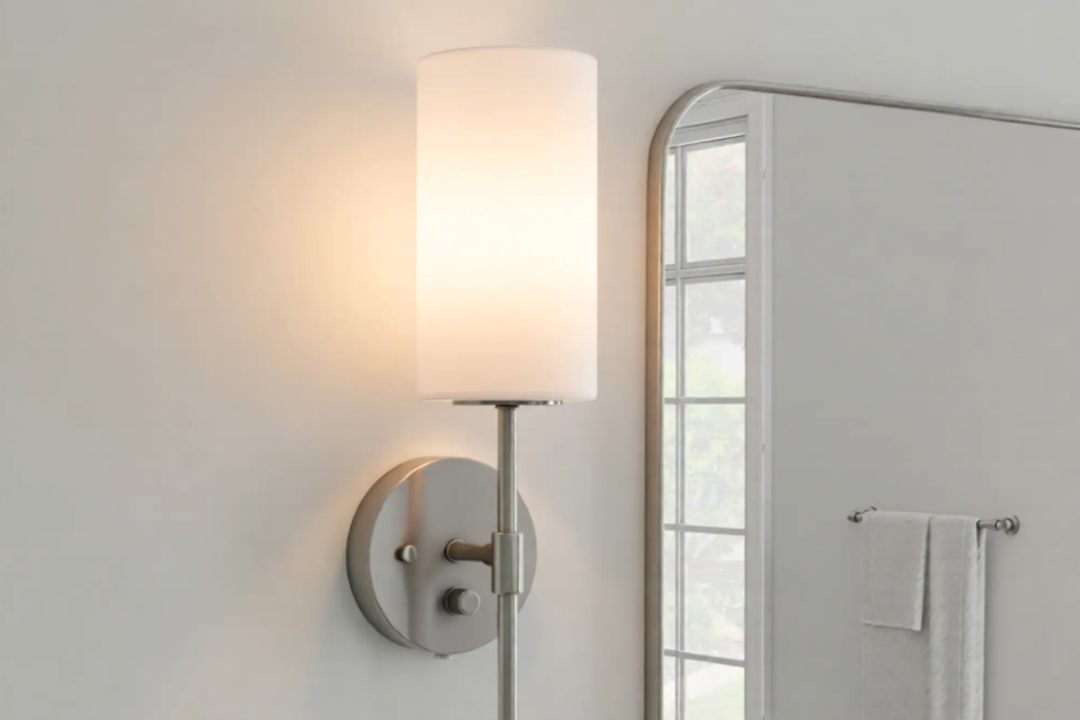
The modern wall sconce, particularly the “Brushed Nickel Slim Wall Sconce” (BNWS), represents a significant evolution in interior lighting design. Far removed from its torch-bearing predecessors, the contemporary sconce prioritizes both aesthetic integration and functional illumination. This article delves into the characteristics, applications, and historical trajectory of the BNWS, offering a detailed overview for designers, homeowners, and those interested in architectural lighting.
Design Philosophy and Aesthetic Principles
The design of the Brushed Nickel Slim Wall Sconce Condepot is rooted in a philosophy of minimalist modernity. It embodies a commitment to clean lines, understated sophistication, and a material palette that emphasizes durability and visual neutrality.
Minimalism and Form
The “slim” aspect of the BNWS is central to its design. It signifies a deliberate reduction of bulk and ornamentation, allowing the fixture to recede rather than dominate a space. This lean profile is not merely an aesthetic choice; it’s a functional one, making the sconce suitable for narrower hallways, smaller rooms, or areas where visual obstruction is undesirable. The form is typically rectilinear, cylindrical, or a flattened elliptical, prioritizing geometric purity.
Brushed Nickel Finish
The choice of brushed nickel as a finish is a key differentiator. Unlike polished chrome or brass, brushed nickel offers a matte or satin appearance, achieved through a process of brushing the metal surface. This finish presents several advantages:
- Subdued Sheen: It reflects light softly, avoiding the harsh glare associated with highly polished metals. This contributes to a calmer, more diffused ambient light.
- Durability and Maintenance: Brushed nickel is inherently resistant to fingerprints, water spots, and minor scratches, making it a practical choice for frequently used or high-traffic areas. This reduces the need for constant cleaning and preserves its appearance over time.
- Versatility: Its neutral gray tone complements a wide spectrum of color palettes and design styles, from cool-toned contemporary schemes to warmer, transitional interiors. It acts as a visual chameleon, adapting rather than dictating.
Materiality and Construction
Beyond the finish, the underlying construction of a quality BNWS involves robust materials. Typically, these include:
- Steel or Aluminum: These metals form the primary structure, providing rigidity and heat dissipation.
- Diffuser Materials: If applicable, diffusers are often made from frosted glass, acrylic, or specialized polycarbonate. These materials are chosen for their light-diffusion properties, ensuring an even, glare-free light output. The “slim” design often necessitates compact diffuser elements or integrated LED arrays.
Functional Applications and Placement Strategies
The versatility of the Brushed Nickel Slim Wall Sconce extends to its numerous functional applications and strategic placement within an interior environment. It is more than just a decorative element; it is an active participant in shaping the lighting narrative of a room.
Ambient Illumination
While often secondary to primary overhead lighting, sconces can contribute significantly to ambient light. When strategically placed in multiples, they can provide a soft, pervasive glow that avoids harsh shadows and creates a welcoming atmosphere. Consider them as architectural punctuation marks, softening the edges of a room.
Task Lighting
In specific contexts, the BNWS can function as effective task lighting. For instance:
- Bedside Lighting: Mounted on either side of a bed, they free up nightstand space and provide focused reading light without disturbing a partner. Articulating or adjustable variants are particularly useful here.
- Bathroom Vanity Lighting: Flanking a mirror, they provide even, shadow-free illumination for grooming tasks. The slim profile is advantageous in compact bathrooms.
Accent Lighting
As accent lighting, the BNWS excel at highlighting architectural features or artwork. Positioned above a painting, a textured wall, or within shelving units, they draw the eye and add depth to a space. They act as discreet spotlights, illuminating carefully chosen focal points.
Strategic Placement Considerations
Effective placement of a BNWS involves more than simply mounting it to a wall. Consider the following:
- Height: The typical mounting height is between 60 to 72 inches from the floor to the center of the fixture, or approximately eye-level. This minimizes glare and ensures even light distribution.
- Spacing: When using multiple sconces, maintain consistent spacing to create rhythm and balance. This often depends on the wall length and the desired visual effect.
- Beam Angle: Understand the light distribution pattern of the specific sconce. Some direct light upwards and downwards (up/downlight), while others offer a more diffuse or focused beam. This influences the character of the illuminated space.
Technological Advancements and Energy Efficiency
The evolution of illumination technology has profoundly impacted the design and performance of the Brushed Nickel Slim Wall Sconce. Modern sconces are increasingly integrating advanced lighting solutions, moving beyond incandescent bulbs.
LED Integration
Light Emitting Diodes (LEDs) are now the prevalent light source in modern sconces. Their adoption has been driven by several key factors:
- Energy Efficiency: LEDs consume significantly less energy than traditional incandescent bulbs, resulting in lower electricity bills and reduced environmental impact. This is a crucial consideration in an era of increasing energy awareness.
- Longevity: LEDs have a remarkably long lifespan, often tens of thousands of hours, drastically reducing the frequency of bulb replacement. This is particularly beneficial for fixtures that are difficult to access.
- Compact Form Factor: The small size of individual LED chips allows for the “slim” profile that defines this category of sconce. This enables designers to create minimalist fixtures without sacrificing light output.
- Color Temperature Control: LEDs offer a wide range of color temperatures, from warm white (2700K-3000K) to cool white (4000K-5000K) and beyond. This allows users to select lighting that complements the desired mood and function of a space.
Dimming Capabilities
Many contemporary BNWS fixtures are designed with dimmable LEDs, offering enhanced control over light intensity. This is achieved through compatible LED drivers and dimmers, allowing users to adjust the brightness to suit various activities or moods. The ability to dim transforms a static light source into a dynamic element, adapting to the ebb and flow of daily life.
Smart Lighting Integration
The advent of smart home technology has extended to lighting. Some modern BNWS fixtures can be integrated into smart home ecosystems, allowing for control via:
- Mobile Apps: Adjusting brightness, color temperature (if applicable), and scheduling on/off times from a smartphone or tablet.
- Voice Assistants: Controlling lights through voice commands with devices like Amazon Alexa or Google Assistant.
- Automation: Programming lights to respond to occupancy sensors, time of day, or other smart home triggers.
Historical Context and Design Evolution
To fully appreciate the Brushed Nickel Slim Wall Sconce, it’s beneficial to understand its place within the broader history of architectural lighting and design. Like a river carving its path, lighting design has continuously adapted to technological shifts and aesthetic currents.
From Primitive Illumination to Early Sconces
The concept of a wall-mounted light source dates back to ancient civilizations, where torches and oil lamps were affixed to walls to cast light into dark interiors. These early “sconces” were primarily functional, providing basic visibility. As technology progressed, candles in metal holders became common in medieval and Renaissance periods, often elaborately decorated to signify status.
The Industrial Revolution and Electrical Lighting
The 19th century and the advent of gas lighting and later electrical incandescent bulbs marked a pivotal shift. Wall sconces began to incorporate these new light sources. Early electrical sconces often mimicked gaslight fixtures or featured exposed bulbs, prioritizing function over refined aesthetics.
The Rise of Modernism and Streamlining
The 20th century saw the emergence of modern design principles, characterized by a rejection of historical ornamentation and a focus on functionality and clean forms. This movement, particularly influential after World War II, laid the groundwork for today’s minimalist designs. Designers began to strip away excess, favoring geometric shapes and industrial materials. The “slim” profile of today’s sconces can be seen as a direct descendant of this streamlined aesthetic.
Contemporary Design and the BNWS
The Brushed Nickel Slim Wall Sconce is a product of this ongoing modernist legacy, refined by contemporary technological advancements. It embodies the modern desire for:
- Unobtrusive Design: Lighting that complements rather than competes with the architectural shell.
- Energy Efficiency: A response to environmental concerns and practical economic considerations.
- Versatility: Fixtures that can adapt to a range of interior styles and functional requirements.
- Material Honesty: An appreciation for materials that display their inherent qualities rather than being disguised.
Installation and Maintenance
Proper installation and routine maintenance are crucial for the long-term performance and aesthetic integrity of any lighting fixture, including the Brushed Nickel Slim Wall Sconce.
Professional Installation Considerations
While some experienced DIY enthusiasts may undertake sconce installation, professional electrician services are often recommended, especially for new wiring or complex setups. Key installation points include:
- Electrical Code Compliance: Ensuring all wiring and connections adhere to local electrical codes for safety and legality.
- Junction Box Placement: The sconce’s mounting plate must securely attach to a wall-mounted junction box, which houses the electrical connections.
- Secure Mounting: The fixture must be firmly affixed to the wall to prevent movement or detachment.
- Power Disconnection: Always ensure the power supply to the circuit is turned off at the breaker before commencing any work.
Routine Maintenance
The brushed nickel finish and LED light sources minimize maintenance requirements, but some basic care can prolong the life and appearance of the fixture:
- Dusting: Regular, gentle dusting with a soft, dry cloth is sufficient to remove accumulated dust.
- Cleaning the Finish: For deeper cleaning, a slightly damp cloth with mild soap and water can be used. Avoid abrasive cleaners, harsh chemicals, or scouring pads, as these can damage the brushed finish. Dry thoroughly immediately after cleaning.
- Diffuser Care: If the sconce includes a diffuser (glass or acrylic), clean it according to the manufacturer’s recommendations, usually with a mild glass cleaner or soapy water. Ensure it is replaced securely.
- LED Longevity: Unlike incandescent bulbs, LEDs do not typically “burn out” but rather degrade over a very long period. Therefore, bulb replacement is generally not a concern. If an LED fails prematurely, particularly in an integrated fixture, it may require professional repair or replacement of the entire unit if not designed for modular component replacement.
By understanding these facets of design, function, technology, history, and care, one can fully appreciate the understated sophistication and practical utility that the Brushed Nickel Slim Wall Sconce brings to modern interior design. It stands as a testament to the idea that effective lighting is both an art and a science.